If you’ve ever walked the tree-lined blocks around Mount Morris Park—now officially Marcus Garvey Park—you understand immediately that this is not just another Manhattan neighborhood. This is Harlem at its most architecturally distinguished, most historically layered, and most intact. For buyers seeking a true townhouse lifestyle in New York City, Mount Morris Park remains one of Harlem’s most prized and protected residential enclaves.
As a Harlem resident and longtime townhouse specialist, I’ve watched this neighborhood evolve carefully and intentionally—never rushed, never careless. When you buy here, you’re not simply purchasing a home; you’re joining a legacy rooted in craftsmanship, preservation, and community. Few Manhattan neighborhoods still offer this combination, and even fewer offer it at the scale Harlem does.
The Power of Landmark Designation in Harlem
The Mount Morris Park Historic District was designated in phases, with additional blocks added in 2017 to protect more of the neighborhood’s architectural legacy. That designation matters deeply because it ensures the soul of the neighborhood is not quietly eroded over time by out-of-scale renovations, careless alterations, or design that ignores historical context. Take a walk down West 123rd Street, where a glass-and-steel condominium now stands beside historic brownstones, and you’ll immediately understand why the Landmarks Commission extended the district in 2017.
One of the greatest misconceptions about living in a landmark district is that it limits what you can do with your home. While it certainly dictates any decisions regarding your facade, in reality landmark designation protects what matters most. It preserves architectural coherence, ensures original façades are respected, and prevents jarring changes that can undermine the long-term value of an entire block. Or as one architect who specializes in historic townhouses once told me, “landmarking doesn’t restrict you—it saves you and your neighbors from your own bad taste.” In Mount Morris Park, that protection is visible everywhere: in the consistent rooflines, preserved brickwork, original proportions, and in the way the neighborhood evolves thoughtfully rather than haphazardly. These safeguards don’t freeze a neighborhood in time; they allow it to mature with intention—and that is precisely why landmarked neighborhoods in Manhattan continue to outperform.
Where History Meets Modern Architecture
One of the lingering myths surrounding landmarked townhouses is that they are frozen in time, unable to accommodate modern life. When done well, the opposite is true. A thoughtful renovation respects the exterior while intelligently reimagining the interior for contemporary living.
146 West 119th Street is a perfect example.
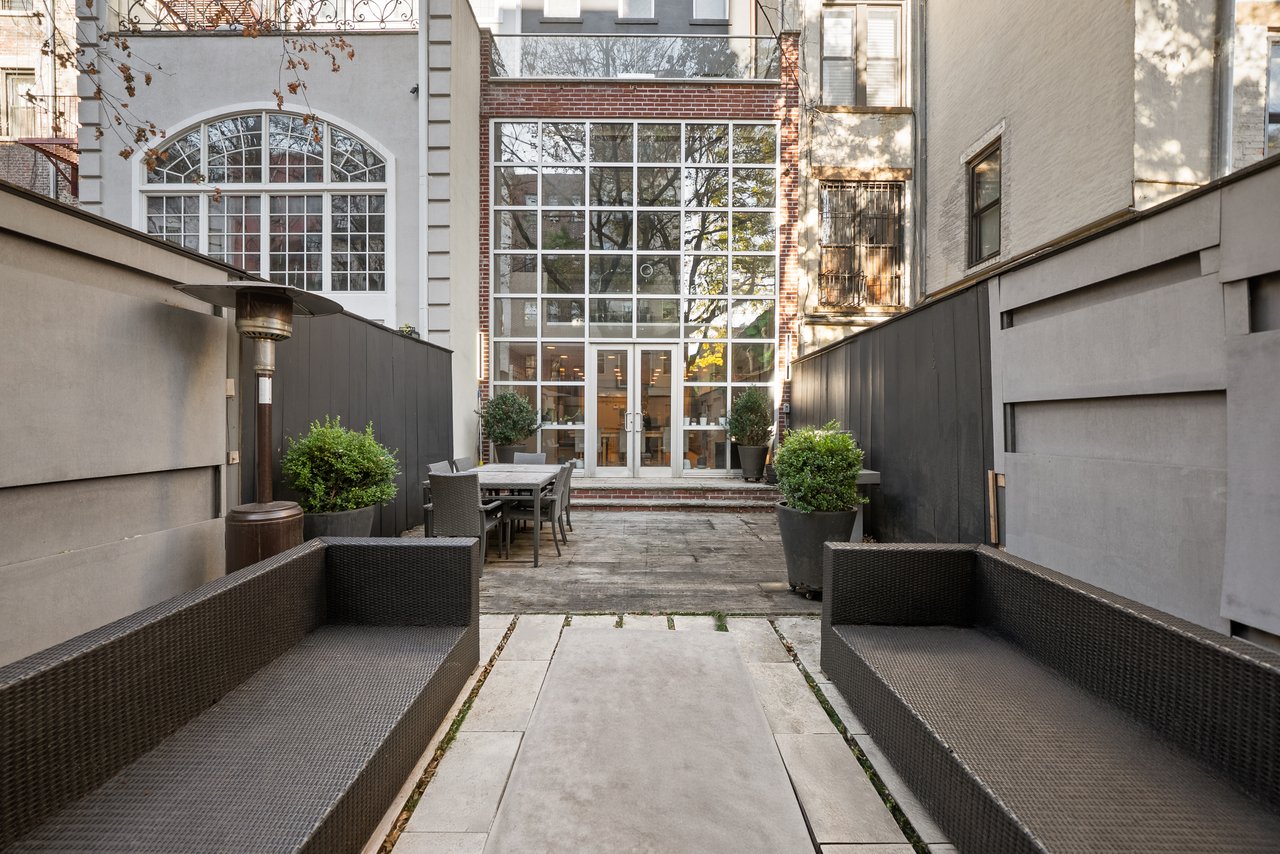
From the street, the home reads as it should: a handsome Harlem townhouse façade standing in architectural harmony with its neighbors. But inside—and especially at the rear of the home—the experience changes dramatically. A soaring 20-foot glass wall brings natural southern light cascading through all levels of the house, creating a conversation between history and modernity that feels deliberate rather than decorative.
This design does not compete with the building’s past—it complements it. The façade remains historically faithful while the interior embraces light, openness, and functionality for how people live today. It is exactly how landmarked homes should evolve.
Inside a Modern Harlem Townhouse
This three-bedroom, three-and-a-half-bath townhouse was designed with lifestyle in mind, without sacrificing character. The garden level houses a true entertainer’s kitchen, anchored by a Wolf cooktop, Sub-Zero refrigerator, GE Monogram double ovens, and a walk-in pantry with wine storage and an additional refrigerator. The den opens directly onto a landscaped garden designed by Vincent Falls—an extension of the home as much as an outdoor escape.
The parlor level makes a statement immediately, with an oversized antique Italian chandelier and a striking visual axis created by the glass wall at the rear. A glass-railed interior balcony overlooks the dining level, while a flexible media space easily becomes a home office, studio, or lofted retreat. Pocket doors allow the home to shift effortlessly between open entertaining and private living.
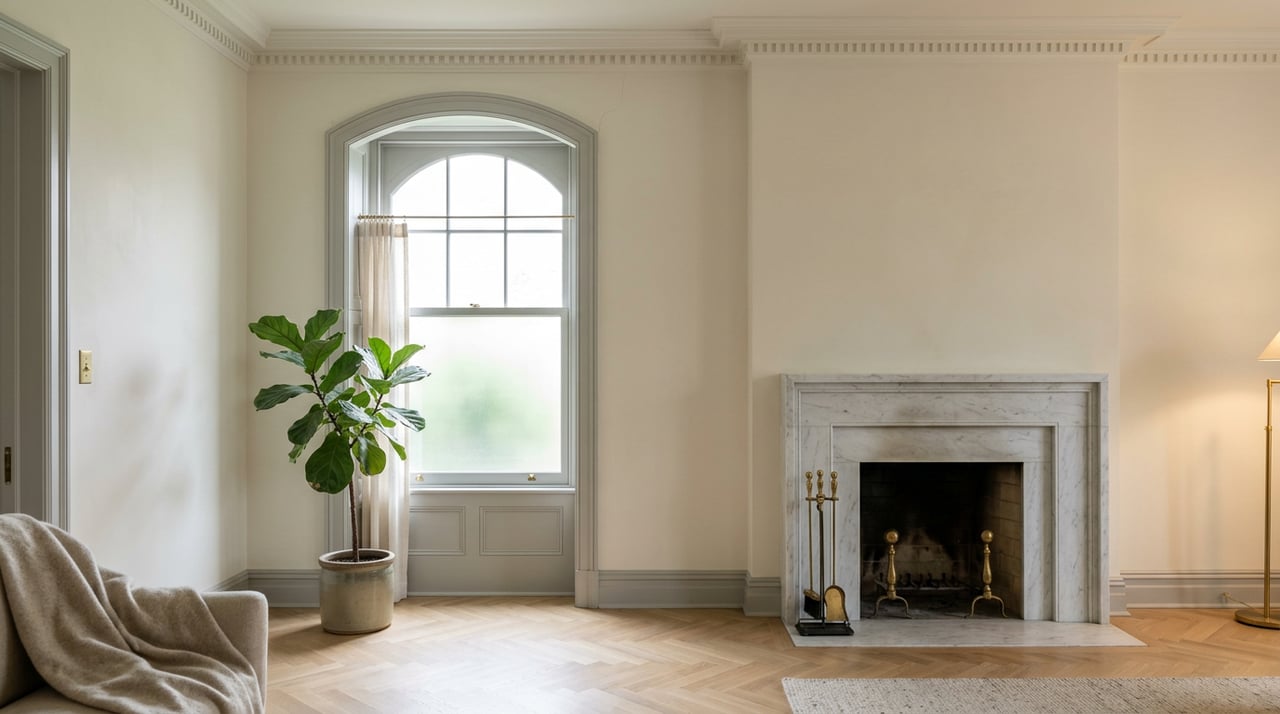
Three original wood-burning fireplaces remain—a rarity in renovations of this scale—bringing warmth and authenticity into a fully modernized environment. Zoned HVAC ensures year-round comfort, and the primary suite offers a private terrace, spa-caliber bath with Ann Sacks soaking tub, Dornbracht fixtures, oversized rainfall shower, and two walk-in closets designed for both elegance and ease.
Above it all, full stair access to the roof—not a ladder or hatch—offers the opportunity to create a future terrace, adding another dimension to townhouse living in Harlem.
Why Buyers Are Choosing Mount Morris Park
Harlem is no longer “emerging”—it arrived years ago and did so with intention. Mount Morris Park, in particular, offers a rare balance: architectural integrity, cultural relevance, and true neighborhood scale.
Two blocks from Marcus Garvey Park and moments from 125th Street’s commercial and cultural corridor, residents benefit from proximity to the Studio Museum, Whole Foods, Trader Joe’s, Target, and some of Harlem’s most celebrated restaurants—all without sacrificing the residential calm that defines the neighborhood.
For many buyers, Mount Morris Park is the moment everything clicks:
This feels like Manhattan—but elevated, grounded, and personal.
The Harlem Townhouse Advantage
Harlem offers something few neighborhoods still do: historic architecture at a meaningful scale, coupled with long-term value that rewards patience and perspective. Buyers seeking a Manhattan brownstone, a Harlem townhouse, or a landmarked home with modern upgrades increasingly recognize that Harlem is not a compromise—it is a strategy.
This is where you find immaculate blocks, enduring design, and a community that values its past without resisting its future.
Keep in Mind
In a city that moves quickly, Mount Morris Park moves with purpose.
146 West 119th Street is not merely a house—it is proof that preservation and progress thrive together in Harlem. The façade tells one story. The glass wall tells another. And together, they embody exactly what makes landmark townhouse living in Harlem so compelling.
It’s why I chose to live here.
It’s why my clients do too.
Frequently Asked Questions About Mount Morris Park & Harlem Townhouses
Where is Mount Morris Park in Harlem?
Mount Morris Park is the historic residential enclave surrounding Marcus Garvey Park in Central Harlem. It is bordered roughly by West 118th to West 124th Streets and Fifth to Madison Avenues and is known for its landmarked brownstones, wide tree-lined blocks, and cohesive architectural character.
Why is Mount Morris Park a landmark district?
The Mount Morris Park Historic District is designated to preserve the integrity of Harlem’s historic townhouse architecture. Landmark protections safeguard original façades, stoops, rooflines, and decorative architectural details while ensuring renovations are appropriate to the neighborhood’s historic character. The preservation zone was expanded in 2017 to include additional architecturally significant blocks.
Does landmark designation limit what you can renovate?
Landmark status does not prevent renovation—it guides it. Interior renovations are largely unrestricted, and exterior changes can be approved when they respect the property’s historic character. Well-considered upgrades—such as modern interiors, rear glass extensions, and landscaping—are regularly approved in historic Harlem when they are thoughtfully designed.
Can you modernize a landmark townhouse in Harlem?
Yes. Homes like 146 West 119th Street demonstrate how landmarked homes can seamlessly combine historic exteriors with contemporary interiors. Features such as glass walls, modern kitchens, spa bathrooms, climate control, and outdoor space are all possible within the framework of landmark approval when the architectural intent is sound.
Are Harlem townhouses a good investment?
Landmarked townhouses in Harlem have historically performed well over time due to architectural scarcity, expanding demand, and limited supply. Neighborhoods like Mount Morris Park offer long-term value because of protected streetscapes, increasing neighborhood infrastructure, and growing buyer interest in full-floor living and private outdoor space within Manhattan.
What makes Mount Morris Park one of Harlem’s best neighborhoods?
Mount Morris Park combines historic architecture, strong community engagement, cultural institutions, green space, and proximity to major commercial corridors. Buyers are drawn to its quiet residential blocks, preserved buildings, and walkable access to dining, transit, and parks.
How much do townhouses in Harlem typically cost?
Townhouse prices in Harlem vary widely depending on location, width, condition, and landmark status. Turnkey single-family homes in Mount Morris Park can range from the mid-$2M range into the $5M+ range depending on size, renovation quality, and outdoor space.
Is Mount Morris Park the same as Marcus Garvey Park?
Marcus Garvey Park is the official name of the park itself. Mount Morris Park refers to the surrounding historic district and residential neighborhood.
Are Harlem townhouses good for families?
Yes. Harlem townhouses provide more space, outdoor access, privacy, and flexibility than most apartments in Manhattan. Buyers frequently seek Harlem townhouses for family living, multigenerational use, and long-term stability.
Who is the best agent for buying a townhouse in Harlem?
Working with an agent who deeply understands Harlem block-by-block is essential. Townhouses vary dramatically based on landmark status, depth, light, and renovation quality, and the best opportunities often never hit public platforms. Specialized, hyper-local guidance makes a measurable difference.
Written by Julia Boland
24+ Year NYC Real Estate Advisor specializing in Harlem townhouses, brownstones, and landmark properties
📍 Harlem to Tribeca | ✉️ [email protected] | 🌐 TheBolandTeamNYC.com #TheBolandTeamNYC