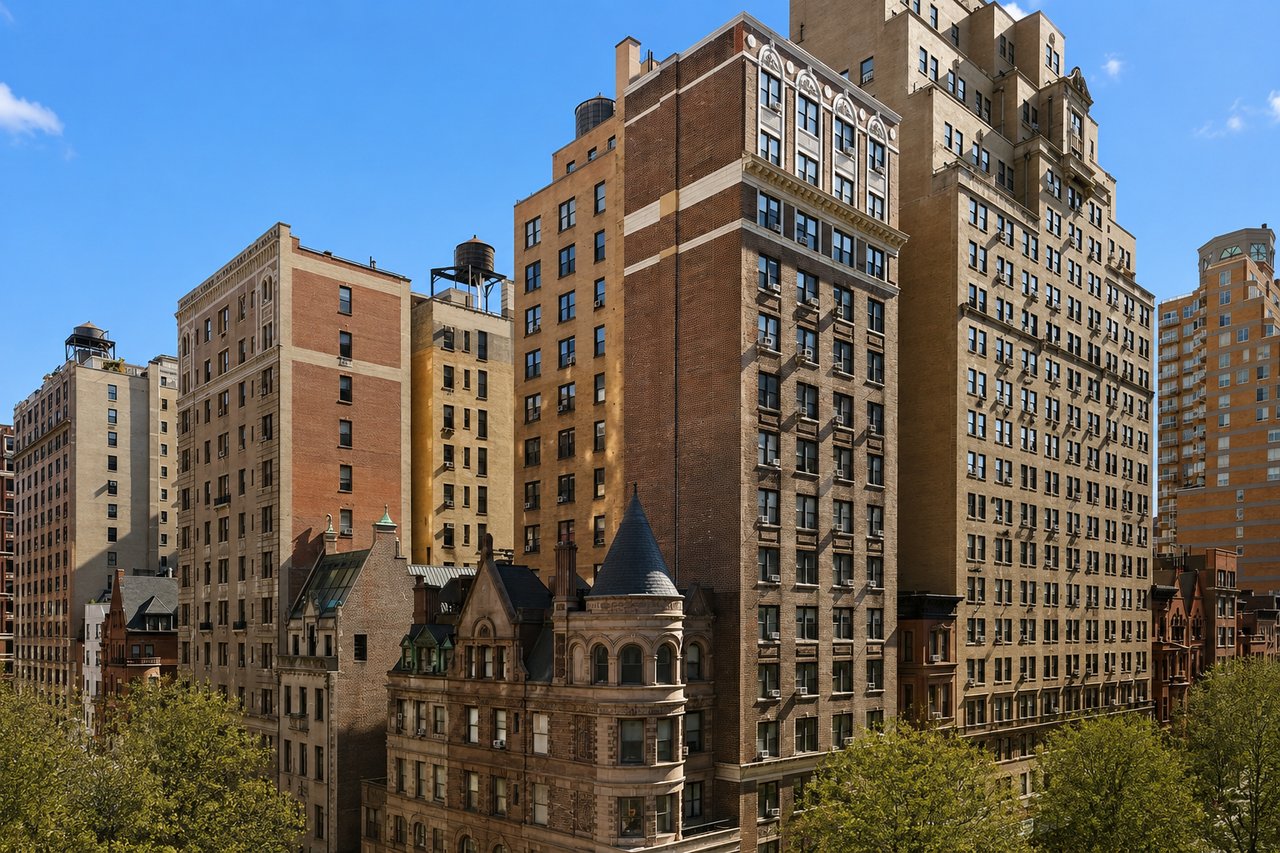
What Manhattan buyers and sellers should be doing now to prepare for the fall 2026 real estate market
Every year, Manhattan real estate seems to observe the same unofficial calendar. August slows down. People leave the city. Buyers go on vacation. Sellers wait. And everyone assumes the fall market will begin sometime after Labor Day.
But this year, something feels different. I have been busy throughout August, and colleagues across the industry tell me they are experiencing the same thing. The traditional August slowdown has been surprisingly absent.
The Fall market has already begun.
Not all of the inventory may be visible yet, but many of the decisions that will determine who succeeds this fall are already being made. And let's start with something buyers may not realize: not every property preparing for the fall market is necessarily showing up on the public real estate websites yet.
Some NYC sellers and their agents are taking advantage of REBNY's Participant Only Listing designation, or POLD. This allows a property to be marketed within the brokerage community before it is distributed publicly to consumer-facing websites.
For sellers, that period can provide an opportunity to test positioning and generate interest without immediately accumulating public days on market, something that can become increasingly important if a property sits unsold and buyers begin to wonder why.
For buyers, however, it reinforces an important point: the inventory you see online isn't always the entire market. Some listings are available only to real estate agents, which means buyers relying solely on public real estate websites may never see them.
Meanwhile, sellers are deciding when to list and at what price. Apartments are being prepared, staged and photographed. I already have two September photo shoots scheduled for beautiful, large, renovated Manhattan apartments that will be coming to market this fall.
For Sellers, September Is Not the Time to Start Preparing
One of the biggest misconceptions I encounter is that preparing a property for sale ends once you're ready to list it. In reality, that is only the beginning. Once you've chosen the agent who will represent your home, some of the most important decisions are still ahead.
Before a Manhattan property comes to market, I want to understand much more than what comparable apartments have recently sold for. What will the property's competition look like? Where does it sit within that competition? Who is the most likely buyer? Which features deserve to be emphasized? Are there improvements worth making before listing and, equally important, which improvements are not worth making?
Then there is pricing. A property's asking price isn't simply an estimate of what the apartment is worth. It is part of the marketing strategy. Price correctly and you can create urgency and competition. Price incorrectly and you may spend the most valuable weeks of your listing chasing the market and ultimately sell for less.
I understand why sellers sometimes worry that pricing too competitively means leaving money on the table. But there is plenty of market data to support the opposite conclusion. Buyers recognize value, and when a property is positioned correctly, competition between buyers, not an ambitious asking price, is often what pushes the final sale price higher.
This becomes particularly important in September because the fall market typically brings new inventory. A seller who might have faced three competing properties in late August could suddenly face eight or ten after Labor Day. And buyers don't evaluate your apartment in isolation. They evaluate it against everything else they can buy.
That is why the weeks leading into the fall market can be so valuable. They give sellers time to make decisions deliberately rather than reactively and to enter the market with a strategy rather than develop one after the market has already responded.
Buyers Should Be Preparing Too
Buyers often approach the Fall market differently. If they're currently renting, they may not feel much urgency. After all, many NYC leases don't expire until spring or summer. But first-time buyers often underestimate how long the buying process can take. From beginning your search to actually closing on an apartment can take six months or more. That means someone whose lease expires next spring may need to start preparing now.And waiting for inventory isn't necessarily the answer. What if the property you're searching for isn't publicly on the market yet?
Why get serious when there isn't anything you want to buy? Because in Manhattan, finding an apartment is only one part of buying it. And it isn't the first step you should take. Before the right property appears, you should understand your financing, your comfortable purchase price, your liquidity after closing and the types of buildings that realistically work for your financial profile and lifestyle.
If you're financing, this is the time to have a meaningful conversation with a lender, not simply generate an online preapproval. And if your income or financial structure is more complicated than a traditional salary, there is even more reason to start early.
If you're considering a co-op, you should understand how a board is likely to evaluate your finances before you fall in love with an apartment. If you're deciding between a condo and a co-op, you should understand how those ownership structures affect not just price, but financing, liquidity requirements, subletting, renovation, closing costs and future resale. And if you're looking across several Manhattan neighborhoods, now is the time to determine where you're willing to compromise.
This is one of the reasons I wrote Buying Smart in NYC: An Insider's Guide to Condo & Co-op Buying. For first-time NYC buyers in particular, understanding how the market works before you start looking can be just as important as finding the right property.
Because once the right property appears, the market isn't going to wait while you figure all of that out.
Preparation Creates Leverage
This is the part of real estate that receives far less attention than finding listings. A prepared buyer can recognize an opportunity faster because they already understand what they're looking for, what they can afford and what represents genuine value. They can make an offer with confidence because their financing and attorney relationships are already in place. And perhaps most importantly, they are less likely to make an emotional decision simply because the market suddenly feels competitive.
The same principle applies to sellers. A seller who has studied the competition, prepared the property and established a pricing strategy with an experienced real estate professional doesn't have to make hurried decisions when competing listings suddenly appear after Labor Day. The strategy is already in place.
I have been in conversations for months with the owners of the two properties I will be bringing to market in the coming weeks. We haven't been waiting for the fall market to arrive. We have been preparing for it. In Manhattan real estate, the advantage often belongs to the person who did the work before everyone else realized it was time to act.
The Best Opportunities Often Appear During Transitions
I have spent more than 25 years working through Manhattan real estate cycles, and transitional markets are often the most interesting. They create uncertainty.
Right now, there is certainly uncertainty for buyers relying on financing, particularly as mortgage rates have moved higher again. But none of us has a crystal ball. Rates could be higher or lower a year from now, which is precisely why I don't think buyers should build their entire purchasing strategy around trying to predict them.
The more important question is: What are you paying for the property? There is an important distinction between the price you pay for an apartment and the cost of financing it. Your mortgage rate determines your cost of capital today. But if rates decline in the future, you may have an opportunity to refinance. What you can't do later is renegotiate the price you paid for the property.
Particularly below $2 million, I am seeing opportunities in Manhattan that I think deserve buyers' attention. There are good properties trading at prices below where comparable apartments would have sold several years ago. For the right buyer, acquiring the right property at an attractive basis can matter far more over the long term than perfectly timing a mortgage rate.
What I'm Watching as We Head Into Fall 2026
Over the next several weeks, I'll be paying particular attention to new inventory, signed contract activity, price reductions and the amount of time properly priced properties remain on the market.
But I won't just be looking at Manhattan as a whole. I'll be watching these indicators by price point because different segments of the market can behave very differently. Strength at one price level can easily coexist with weakness at another.
I'll also be watching something that doesn't always show up immediately in the statistics: buyer and seller behavior. Are buyers becoming more decisive? Are sellers becoming more realistic? Where are multiple bids occurring? Which properties are sitting despite seemingly attractive pricing? What compromises are buyers willing to make and which ones are they refusing to make? Because market behavior is always evolving.
Closed-sale data is enormously valuable because it tells us where transactions actually ended. But those closings often reflect negotiations that happened months earlier. Signed contracts give us a faster indication of where demand is moving now. And what is happening at showings, and negotiating tables can sometimes tell us where the market is heading before either dataset fully captures it.
That is where experience becomes particularly valuable: the numbers tell you what happened, but current market behavior can tell you what may be changing.
The Fall Market Has Already Begun
If you're thinking about buying or selling a Manhattan property this fall here is what you should bear in mind. For sellers, this means understanding your property's position in the market before the September inventory arrives. For buyers, it means getting the financial, legal and strategic pieces in place before the apartment you want appears. The people who navigate Manhattan real estate most successfully are rarely the ones who predict every turn in the market correctly. They're the ones who are prepared when the opportunity arrives.
Labor Day may mark the psychological beginning of Manhattan's fall real estate market. But for serious buyers and sellers, the fall market has already begun.
Frequently Asked Questions
When does the Fall real estate market start in Manhattan?
The Manhattan Fall market is traditionally associated with the weeks immediately following Labor Day, when new inventory typically comes to market. But preparation begins much earlier, and in 2026 I have seen considerably more activity during August than the traditional seasonal slowdown would suggest.
Is fall a good time to buy an apartment in Manhattan?
Fall can be an excellent time to buy because September typically brings new inventory to the market. But buyers should start preparing before they find the right apartment. Financing, liquidity requirements, attorney relationships and an understanding of condo and co-op requirements should ideally be addressed before you are ready to make an offer.
Are all NYC apartments for sale listed on public real estate websites?
No. Some NYC properties may be marketed only within the real estate brokerage community and will not appear on consumer-facing real estate websites. This is one reason working with an experienced buyer's agent can be particularly valuable: buyers relying solely on public websites may not be seeing all of the inventory available to agents.
How early should I start looking for a NYC apartment before my lease ends?
First-time buyers frequently underestimate how long the NYC buying process can take. From preparing financially and searching for the right property through contract, financing, board approval when applicable and closing, the entire process can take six months or more. If your lease expires next spring or summer, Fall may not be too early to begin preparing.
Should Manhattan sellers wait until after Labor Day to list?
Not necessarily. The right timing depends on the individual property, its competition and current buyer demand. More important than choosing an arbitrary launch date is having the property, pricing and marketing strategy ready before it comes to market.
Should I wait for mortgage rates to fall before buying in Manhattan?
Trying to perfectly time mortgage rates can mean overlooking an attractive buying opportunity. Buyers should consider both the cost of financing and the price they are paying for the property. A mortgage may potentially be refinanced if rates decline in the future; the purchase price of the apartment cannot be renegotiated after closing.
Julia Boland is a Manhattan real estate advisor at Corcoran with more than 25 years of experience advising buyers and sellers of condos, co-ops, townhouses, and new development. She is the author of Buying Smart in NYC: An Insider's Guide to Condo & Co-op Buying (2026). Whether you're just starting to explore your options or ready to make a move, Julia and The Boland Team are here to help. Reach out at TheBolandTeamNYC.com or call (848) 200-1452.