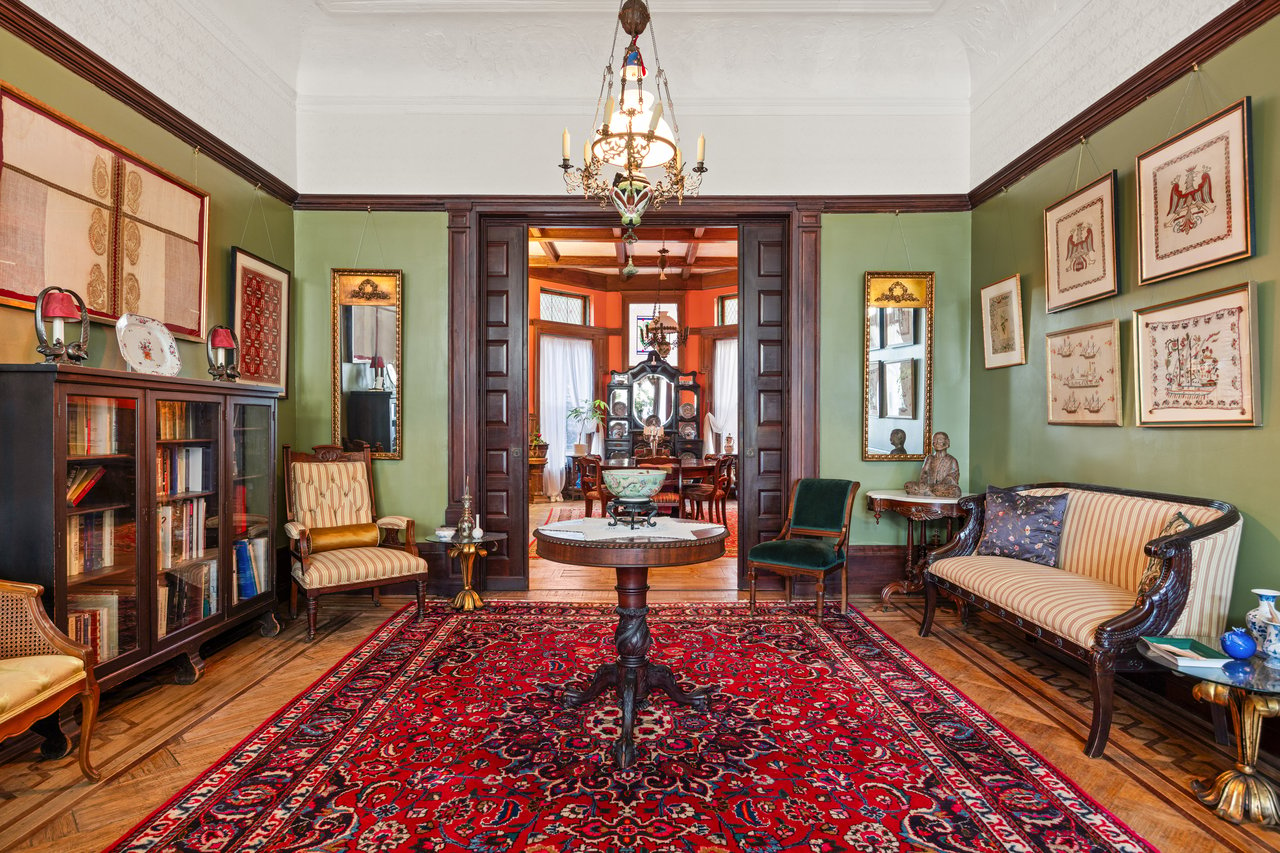
Many townhouse buyers begin their search on the Upper East Side, the Upper West Side, or in Brooklyn—drawn to architecture, light, and a sense of permanence. What often surprises them is where their search ultimately leads. Quietly and without fanfare, Mount Morris Park has become one of Manhattan’s most compelling neighborhoods for buyers seeking historic architecture, long-term livability, and a more measured pace of life. Homes of true architectural integrity rarely come to market here, often before buyers realize they were open to looking uptown at all.
A Different Kind of Value Proposition
As buyers move deeper into their townhouse search, a familiar tension often emerges. Beautiful homes remain available—but so do escalating prices, materially higher property taxes, and compromises that become harder to justify over time. Layouts resist modern living without significant renovation, often requiring an even steeper investment simply to function well day to day.
Mount Morris Park offers a different equation. Here, buyers often find more space for the purchase price, paired with substantially lower property taxes, without sacrificing architectural integrity or historical substance. The homes were designed with proportion, light, and longevity in mind—qualities that support daily life as naturally as they once supported formal entertaining. I saw this firsthand several years ago when I sold 105 West 122nd Street, a historically significant home with a thoughtful renovation, to a buyer who had been searching exclusively in Brooklyn.
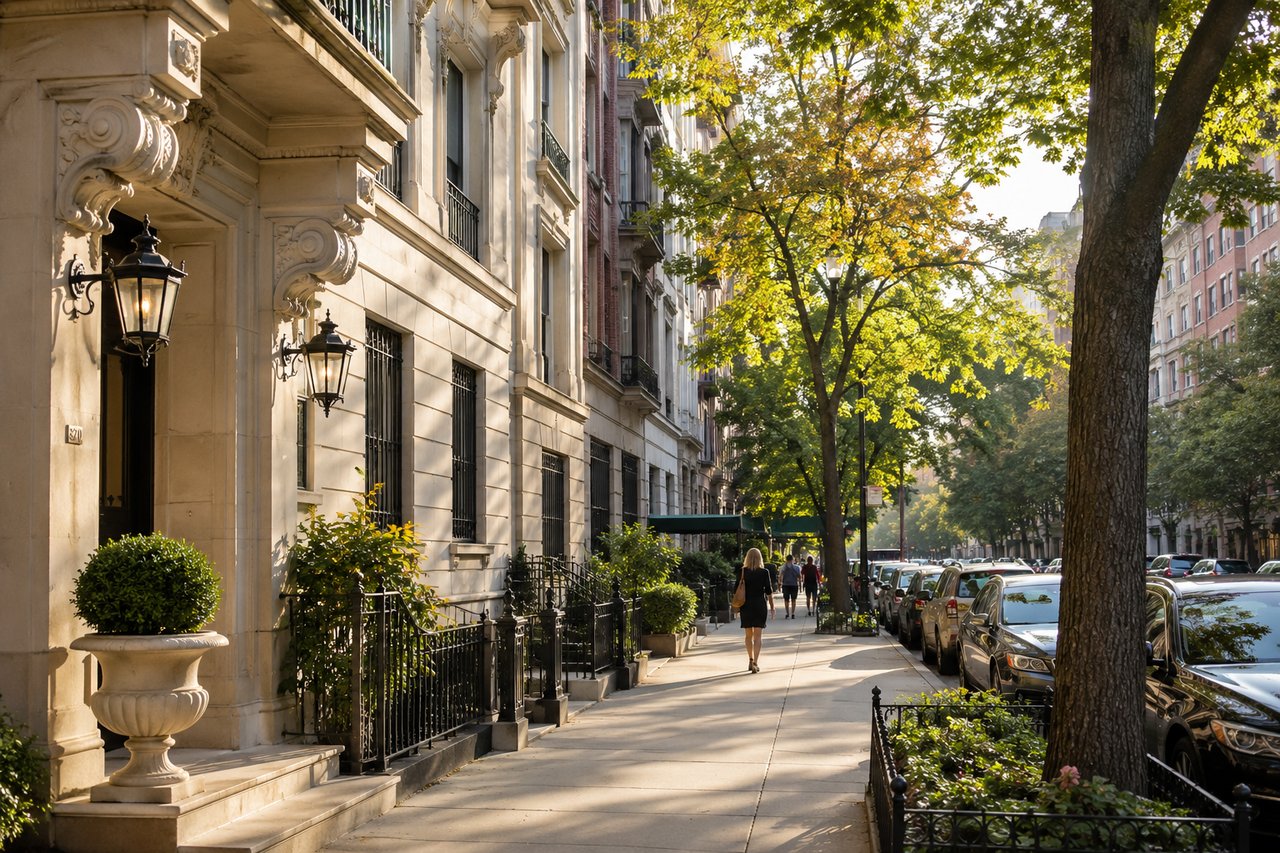
The rhythm of the neighborhood itself is equally compelling. Blocks surrounding Mount Morris Park—almost entirely townhouse-lined—move at a noticeably calmer pace, residential rather than frenetic, rooted rather than transient. Longstanding block associations, including those along 120th Street between Lenox and Fifth Avenues bordering the park’s southern edge, reflect a level of neighborhood engagement that feels increasingly rare in Manhattan. Neighbors know one another and work together on coordinated plantings and seasonal block events, particularly in the warmer months. Here, community is not an abstraction—it is lived.
For many buyers, the appeal lies in rediscovering values they already hold—architectural intelligence, financial rationality, and a genuine sense of belonging—in a place they hadn’t initially considered. Having lived in the neighborhood since 2004, I find it hard to imagine another part of Manhattan I would rather call home. I especially love driving back into the city, coming around Mount Morris Park with its stunning architecture, Marcus Garvey Park, and gently tree-lined streets. I often find myself thinking, “Ah, the Village of Harlem”—a place that feels calm, welcoming, and deeply familiar.
The Power of Architectural Certainty
One of the defining characteristics of the Mount Morris Park Historic District is its consistency. Landmark protection has preserved scale, sightlines, and architectural intent in a way that is increasingly rare in New York City. While other neighborhoods continue to evolve—sometimes unpredictably—Mount Morris Park remains anchored by its original planning.
Overlooking what is now Marcus Garvey Park, the surrounding blocks were developed during a period when residential architecture was designed to endure. The result is a streetscape that feels calm and coherent, with a rhythm of townhouses that share proportion and purpose without repetition. Several homes have found new owners in recent years, most notably 32 Mount Morris Park West, which sold for a record price.
For buyers accustomed to the protected corridors of Carnegie Hill, Riverside Drive, or Brooklyn Heights, this kind of architectural certainty feels familiar—even if the address does not.
A Case Study in Enduring Balance
A key reason Mount Morris Park resonates so strongly with today’s buyers lies in the architects who shaped it. In the late 19th century, Harlem attracted designers who believed architecture should do more than impress. Among them was James E. Ware, whose work continues to stand out for its clarity and restraint. Ware designed 1 West 121st Street as well as 11, 12, 13, and 14 Mount Morris Park West—grand park-facing townhouses developed in the late 1800s as part of a cohesive and thoughtfully planned row.
That philosophy helps explain why certain historic homes feel immediately livable while others feel demanding. Proportion matters. Width matters. The relationship between rooms matters. When those decisions are made well at the outset, a house rarely needs to be reimagined to remain relevant. Over the past several decades, many owners here have undertaken thoughtful renovations that preserve original architecture while quietly integrating modern systems.
Recently, I listed such a townhouse at 12 Mount Morris Park West, which illustrates this balance perfectly. The house has had only three owners in more than a century—an extraordinary rarity in New York City. Its original layout remains largely intact, not because it resisted change, but because it never required correction. Rooms relate to one another intuitively. Light moves easily through the house. The scale feels generous without being theatrical.
Restoration over the years has been undertaken with restraint rather than reinvention. Original materials were preserved wherever possible. Modern systems were integrated quietly. The result is a home that feels resolved—neither frozen in time nor chasing relevance.
What is most telling is how the house lives today rewarding care with ease. That balance is precisely what many buyers are seeking, whether they’re coming from a prewar apartment on Park Avenue, a townhouse near Riverside Park, or a brownstone in Fort Greene.
The Uptown Reframe
For buyers accustomed to certain neighborhoods, looking uptown can feel like a leap. But Mount Morris Park isn’t asking buyers to compromise—it’s asking them to reconsider assumptions.
The conversation has shifted north, as it often does in New York City, encouraging buyers to venture further in search of their ideal home. Much as it did when 12 Mount Morris Park West was built in 1888, Mount Morris Park continues to offer what today’s buyers value most: architectural quality, protected environments, and homes that feel settled rather than speculative. And because it does so quietly, it tends to attract buyers who value substance over signaling—buyers who understand that true luxury often reveals itself slowly.
The question many buyers ultimately ask isn’t, Why would I look uptown? It’s, Why didn’t I look sooner?
For those drawn to historic architecture, thoughtful design, and neighborhoods where scale and integrity are protected, Mount Morris Park has become one of Manhattan’s most compelling places to look—particularly for buyers who once assumed their search would end somewhere else.
Written by Julia Boland, a 24+ year NYC Real Estate Advisor specializing in Manhattan condos, co-ops, and new development, with deep expertise in Harlem and Upper Manhattan.
Frequently Asked Questions About Buying Near Mount Morris Park
Why are buyers from the Upper East Side, Upper West Side, and Brooklyn drawn to Mount Morris Park?
Buyers are drawn to Mount Morris Park for its combination of historic architecture, generous townhouse scale, landmark protection, and a calmer residential rhythm. Many find that the neighborhood offers architectural quality and long-term livability comparable to established areas, with added space, light, and a strong sense of community.
What makes Mount Morris Park architecturally distinctive?
The neighborhood was developed during a period when residential architecture emphasized proportion, craftsmanship, and longevity. Many homes were designed by prominent late-19th-century architects, including James E. Ware, and feature consistent scale, preserved façades, and thoughtfully planned layouts that continue to function beautifully today.
How does landmark designation benefit homeowners in Mount Morris Park?
Landmark designation preserves scale, sightlines, and architectural character, creating long-term stability and visual continuity. Buyers value the confidence that surrounding homes and streetscapes will remain cohesive, protecting light, views, and the overall integrity of the neighborhood.
What type of lifestyle does Mount Morris Park offer?
Mount Morris Park offers a residential pace that feels calm, rooted, and welcoming. Tree-lined blocks, park views, and long-standing block associations create an environment where neighbors know one another and community life flourishes through seasonal plantings, gatherings, and shared stewardship.
Are historic townhouses in Mount Morris Park well suited for modern living?
Yes. Many of the homes were designed with proportion, circulation, and natural light in mind—qualities that translate seamlessly to modern life. Thoughtful renovations over time have integrated contemporary systems while preserving architectural character, creating homes that live comfortably and efficiently.
What attracts buyers to park-facing townhouses in this area?
Homes overlooking Marcus Garvey Park benefit from protected green views, abundant natural light, and a sense of openness rarely found in Manhattan. Park frontage also enhances long-term value by ensuring enduring sightlines and a lasting connection to one of Harlem’s most significant public spaces.
Is Mount Morris Park considered a strong long-term investment neighborhood?
Mount Morris Park is widely regarded as a neighborhood with exceptional long-term fundamentals: landmark protection, architectural pedigree, limited inventory, and increasing recognition among sophisticated buyers. Recent record sales along the park reflect growing confidence in the area’s enduring appeal.