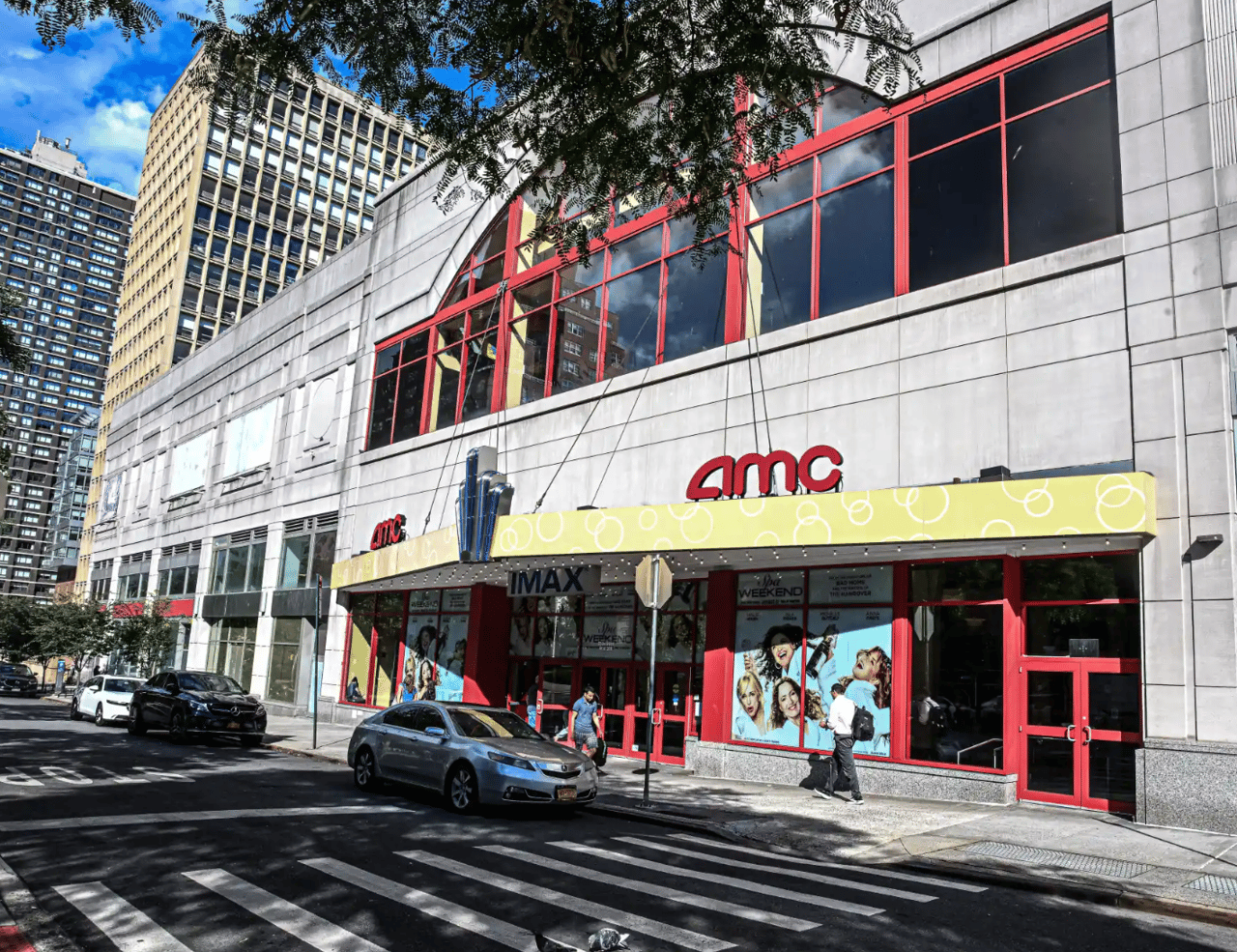
If you've walked past 570 Second Avenue this month, you've probably heard about the movie theater. AMC Kips Bay 15 is closing by the end of 2026, and the petitions, the community board hearing, and the elected officials writing letters have made sure nobody in the neighborhood missed it. What most residents haven't connected yet is that the theater is only one of three storefronts changing hands on that same short stretch of block, all within the same few weeks, all tied to a single owner who had already closed on the property more than a year before anyone outside a closed circle knew about it.
That's the part of this story worth sitting with. Not the theater itself, but how long the building underneath it had already belonged to someone else before the neighborhood found out.
What AMC Actually Said
On August 24, 2026, AMC confirmed what had been rumored for weeks: its lease at the 15-screen multiplex on Second Avenue, in the Murray Hill section of Manhattan near the East River, is being terminated early, not by AMC's choice but at the direction of the property owner. AMC's own statement framed it as a lease matter, not a business decision on their end. The theater opened in 1999 as Loews Kips Bay, with AMC taking over operations in 2006, and it has run continuously since, including what's believed to be the only IMAX screen on Manhattan's East Side.
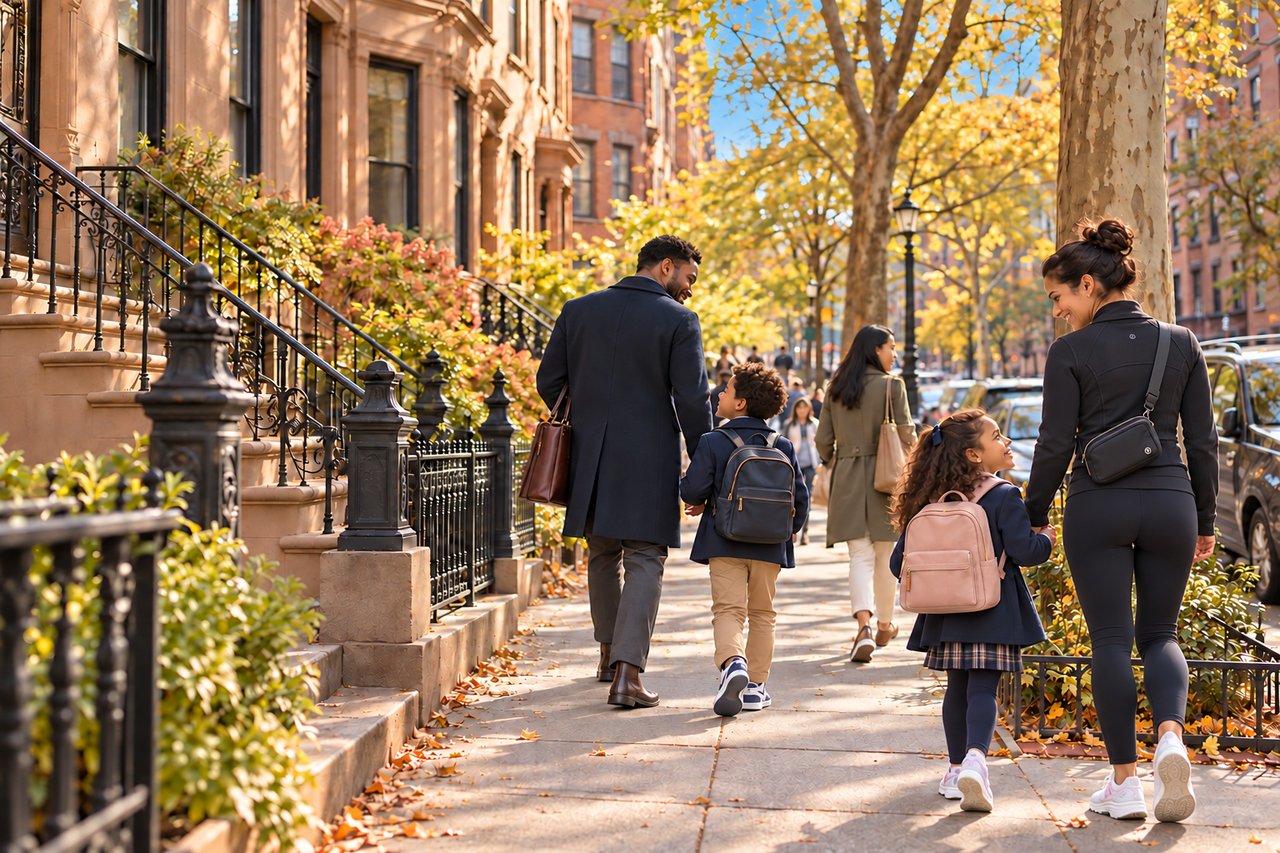
That detail matters to how the neighborhood uses the space. This isn't a boutique screening room. It's the theater within walking distance for families who don't want to cross town for a Saturday matinee, and for the kids' birthday parties that have quietly become part of how this stretch of Murray Hill and Kips Bay marks a childhood. Jessica Lavoie, vice president of the Murray Hill Neighborhood Association's quality of life committee, told a reporter that she and her 11-year-old son have been to countless classmates' birthday parties there. That's the texture the closure actually threatens, not the box office.
The Reveal Came Three Days Later, and It Didn't Come From AMC
Here's where the story stops being about a lease and starts being about ownership. On August 27, three days after AMC's announcement, Assemblymember Keith Powers said his office had confirmed something residents hadn't been told: NYU Langone Health had purchased the retail complex housing the theater, and had owned it for roughly a year already. Not weeks. A year.
Powers put it plainly to Gothamist: he and other officials were still trying to "unwind" how the purchase happened, and whether it had even been formally registered anywhere the public could see. Seven elected officials, including Manhattan Borough President Brad Hoylman-Sigal, U.S. Representative Jerrold Nadler, State Senator Kristen Gonzalez, and Assemblymembers Powers and Micah Lasher, sent a joint letter to NYU Langone CEO Dr. Alec Kimmelman asking for a meeting and an explanation. That letter went out the same week AMC's announcement was still fresh, which tells you the elected officials were reacting to the ownership news, not the lease news. The theater's closing was the trigger. The ownership was the actual discovery.
Same Block, Same Few Weeks
While that letter was circulating, two other things were happening on the same short block that got far less attention.
Fairway Market, which shares the retail complex with the theater, had to publicly reassure its own customers it wasn't going anywhere. A spokesperson for Fairway's parent company, Wakefern Food Corp, told Community Board 6 that Fairway holds a long-term lease and looks forward to remaining in the neighborhood for years. That statement only exists because residents were worried enough to ask.
At the same time, Bank of America announced it's closing its own branch at 560 Second Avenue, the address wedged directly between the theater and the supermarket. Three tenants, one block, one landlord situation that had already changed hands quietly. The bank closure barely registered next to the AMC story, but it's the same real estate, the same few weeks, and part of the same pattern: a stretch of ground-floor retail that residents assumed was stable turning over all at once.
Here's how the timeline actually laid out, once you put it side by side:
Date | What Happened |
|---|---|
Aug 24, 2026 | AMC confirms Kips Bay 15's lease is being terminated early by the property owner; closure expected by year end |
Aug 25, 2026 | Fairway's parent company, Wakefern, publicly affirms its long-term lease at the same complex |
Aug 27, 2026 | Powers reveals NYU Langone purchased the site roughly a year earlier; seven elected officials send a letter to CEO Dr. Alec Kimmelman |
Aug 31, 2026 | Nine neighborhood and tenant groups, organized as the Save Kips Bay Coalition, send their own letter demanding transparency |
Following weeks | Bank of America confirms it's closing its branch at 560 Second Avenue, on the same block |
Sept 9, 2026 | Manhattan Community Board 6 holds its public hearing on the theater's closure |
Laid out this way, the story isn't really "a theater is closing." It's that a single ownership change, made quietly more than a year before anyone said a word about it, ended up touching a grocery run, a bank visit, and a Saturday movie, all inside two blocks of each other.
What the Coalition Is Actually Asking For
The Save Kips Bay Coalition brings together nine groups you'd recognize if you live in the area: the Murray Hill Neighborhood Association, the Alliance for Kips Bay, the Waterside Plaza Tenants Association, the Stuyvesant Town and Peter Cooper Village Tenants Association, the Strauss Houses Tenants Association, the 344 East 28th Street Tenants Association, Friends of Bellevue South Park, the Manhattan East Community Association, and the St. Vartan Park Conservancy. Their August 31 letter didn't ask NYU Langone to cancel its plans outright. It asked for disclosure, and for a commitment to keep neighborhood-serving businesses, specifically the AMC and Fairway, in place.
At the September 9 hearing, Powers said he'd spoken with NYU Langone officials that same day, who confirmed they'd entered into a contract to buy the property about a year ago and intend to take over in early 2027, likely to build outpatient and ambulatory care facilities. NYU Langone's main campus alone runs more than 2 million square feet on First Avenue, a single block from the theater site, and the surrounding blocks already hold Bellevue Hospital and the Margaret Cochran Corbin VA campus. What residents are pushing back on isn't healthcare itself. It's the idea that a grocery store and a movie theater get quietly absorbed into that footprint without anyone who lives there getting a say first.
A neighbor named Theo van der Meer summed up the frustration at the hearing this way: people "chose to live in a neighborhood and not a sprawling medical complex." Whether that sentiment changes NYU Langone's plans is genuinely unclear. No formal closure date has been announced. No rezoning application has been filed publicly as of this writing. The petition asking to save the theater has crossed 8,000 signatures, which tells you the sentiment is real, even if the outcome isn't decided.
What This Actually Changes About Walking the Block
If you live in Murray Hill or Kips Bay, none of this changes your commute or your rent tomorrow. What it changes is how you read the block the next time you're on it. The awning that's been there since 1999 isn't a fixture anymore, it's a lease that already ended, on paper, over a year before the public knew. The grocery store next door had to issue a formal statement just to confirm it wasn't following the theater out. The bank branch on the same short stretch is closing too, and almost nobody outside the immediate area noticed.
That's the actual lesson in this story, and it has nothing to do with real estate transactions in the traditional sense. It's that ownership on a block can change well before anyone who walks it every day finds out, and the first sign is usually a going-out-of-business announcement for something you assumed would always be there.
Whatever comes next for 570 Second Avenue, the community board hearing happened, the letters are on record, and the coalition is still asking questions NYU Langone hasn't fully answered. If you're the kind of neighbor who wants to know what's actually shifting on the blocks around you, not just the headline closure but who owns what and since when, that's a habit worth keeping, long after this particular theater goes dark.
If you're ever curious how changes like this ripple into property values, timing, or what a neighborhood shift actually means for your own plans, The Boland Team is happy to talk it through. Schedule a no-pressure consultation whenever you're ready.