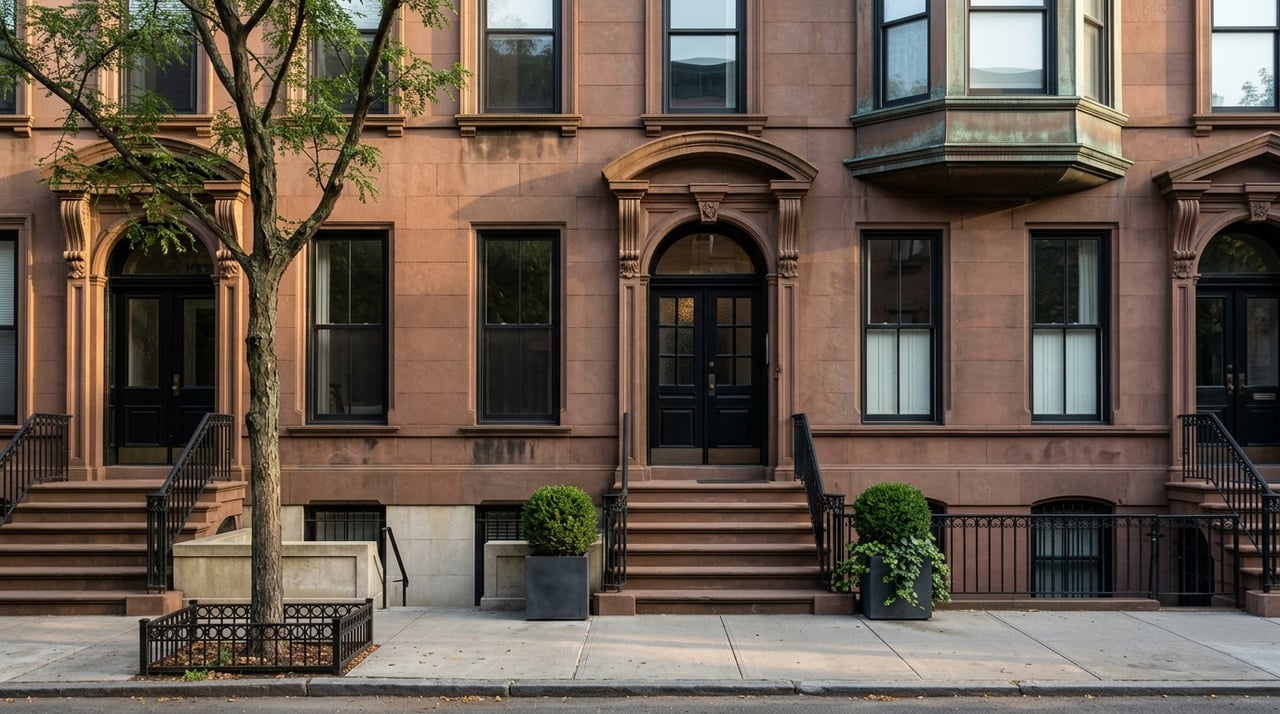
What does daily life actually feel like on a Harlem brownstone block? If you are drawn to townhouse living, historic architecture, and a neighborhood rhythm that feels more personal than high-rise Manhattan, that question matters. On Central Harlem’s brownstone streets near Marcus Garvey Park, the answer is less about hype and more about how the blocks function day to day. Let’s take a closer look.
Brownstone life starts on the block
One of the clearest places to picture this lifestyle is the Mount Morris Park corridor in Central Harlem. The Landmarks Preservation Commission describes the Mount Morris Park Historic District Extension as more than 250 row houses built in the last two decades of the 19th century, many faced with brick and brownstone in neo-Grec, Romanesque Revival, and neo-Renaissance styles.
That architectural consistency shapes how the area feels as you walk it. These are blocks with stoops, rhythmic facades, and a strong street presence. Even when you are close to busy avenues and major cultural institutions, the residential character remains easy to read. My favorite blocks run between Lenox and Adam Clayton Powell between 118th Street to 120th Street. Here you will find some of the most beautiful architecture with many of the homes thoughtfully restored.
The district sits beside what was historically called Mount Morris Park and is now Marcus Garvey Park. The Landmarks Preservation Commission notes the area’s architectural beauty, historic streetscapes, and strong sense of place. In real life, that often translates to a neighborhood experience that feels grounded, walkable, and distinctly Harlem.
Mornings center around Marcus Garvey Park
A day here often begins with the park. Marcus Garvey Park is a real neighborhood anchor, not just a patch of green on a map. According to NYC Parks, it includes playgrounds, an outdoor pool, an indoor pool, an amphitheater, recreation-center programming, fitness equipment, Wi-Fi hotspots, and the historic fire watchtower that many locals immediately recognize.
That kind of amenity mix changes your routine in practical ways. You can start with breakfast at Sette Panne, take a loop through the park, stop at a playground, or fit in some outdoor exercise before the rest of the day gets moving. It is one reason these blocks can feel more livable than their Manhattan address might suggest to someone who has only experienced the borough through denser commercial corridors.
For buyers thinking about everyday quality of life, this is important. Proximity to a park is not just a nice bonus. It often becomes part of how you structure your mornings, weekends, and even work-from-home breaks.
Coffee, errands, and an easy rhythm
The appeal of brownstone Harlem is not only the architecture. It is also the way the neighborhood supports a full day without requiring much friction. Current dining coverage points to coffee and breakfast stops like Family Coffee Truck and Superhet Coffee, which fit naturally into the kind of local routine many buyers hope to find.
This is where the block-by-block character of Harlem really matters. You are not choosing only a property. You are choosing how quickly your day can shift from home to coffee run, park walk, casual errand, or lunch with a friend. There is a terrific dog park in Marcus Garvey park worth visiting with your four legged friend.
For many Manhattan buyers, especially those comparing townhouse blocks with larger condo buildings, that daily rhythm is part of the decision. A brownstone street can offer a more human-scaled pace while still keeping you close to the energy and convenience that make Manhattan work.
Midday can mean culture, not commuting
Central Harlem also stands out because residential life and cultural life sit close together. The Schomburg Center on Malcolm X Boulevard is a National Historic Landmark and one of the world’s leading institutions devoted to Black history and culture. The Studio Museum in Harlem, at 144 West 125th Street, reopened to the public on November 15, 2025, and its new building was explicitly inspired by Harlem brownstones, churches, and busy sidewalks. I love the outdoor gardens.
That detail matters because it reflects a larger truth about the neighborhood. Harlem’s built environment and cultural identity are deeply connected. When you live on these brownstone blocks, that connection is not abstract. It becomes part of your normal week.
A midday museum visit or an afternoon at the Schomburg Center can feel less like a major outing and more like an extension of neighborhood life. For buyers who value access to institutions as part of their lifestyle, this pocket of Harlem offers a rare blend of residential calm and cultural depth.
Evenings still feel connected to Harlem
As the day winds down, the neighborhood keeps offering options. Harlem’s current dining scene spans a wide mix of cuisines, with reporting highlighting soul food institutions, Senegalese food, Italian, French-American, Somali, and bakery or café options. That variety supports an evening that can be as casual or as planned as you want. It is not unusual for local restaurants along Malcolm X Boulevard to host live music. For an ever wider array of restaurant options seek out Frederick Douglass Boulevard and enjoy local favorites such as Lido and Vinateria.
If your perfect city day includes performance and arts access, Harlem still delivers, with one important update. The Apollo’s Historic Theater is currently closed for renovation and is expected to reopen in late 2026, while The Apollo Stages at The Victoria and the free gallery and gift shop remain open.
That is a good example of why local context matters. In a neighborhood with so much history, the current version of a place matters just as much as its legacy. A well-informed buyer usually wants both perspectives.
Why brownstones feel different
Brownstone living is not just about curb appeal. It is also about interior rhythm. The Landmarks Preservation Commission explains that a traditional brownstone row house often had a tall stoop leading to the main entrance, with the foyer and parlor on the first floor and a dining room in the raised basement. A later American Basement plan moved the entrance to street level and allowed a larger parlor across the full front of the first floor.
If you have toured townhouses, you have probably felt that difference immediately. These homes often create a more vertical, room-by-room experience than a typical apartment. Daily life tends to move between stoop, parlor floor, garden level, and upper bedrooms in a way that feels both classic and practical.
Outdoor space is also part of the appeal. Backyard access and parlor-level terraces help explain why townhouse living can feel quieter and more private, even when you are still only steps from active avenues and neighborhood destinations.
The blocks stay residential by design
Part of what makes this area distinctive is that the original Mount Morris Park extension houses were mainly built as single-family dwellings and originally occupied by prosperous middle-class households. That original scale still influences how the neighborhood reads today.
In other words, these blocks were designed to feel domestic. That does not mean frozen in time. A nearby Central Harlem historic district covering West 130th to 132nd Streets helps show the area’s layered evolution, with many late-19th-century row houses later adapted for cultural, religious, civic, and political uses.
That combination gives the neighborhood a useful balance. It feels residential, but not sleepy. Historic, but not disconnected from present-day Harlem. And many of the blocks have active block associations exchanging valuable information for townhouse owners and organizing community events such as block parties and plantings.
What this means if you are buying
If you are considering Harlem brownstone blocks, it helps to think beyond square footage. The real appeal often comes from the intersection of architecture, park access, and cultural infrastructure. These are the kinds of blocks that can resonate with buyers who want visible neighborhood identity and a more intimate version of Manhattan living.
For some, that means a first Manhattan purchase that feels less anonymous than a tower. For others, it means moving into townhouse space with room to spread out and a stronger connection to the street. For relocation or family-assisted buyers, it can mean choosing a neighborhood with both lifestyle depth and a clear sense of place.
This is also where micro-market knowledge matters. Not every Harlem block offers the same experience, and not every townhouse, co-op, or condo solves the same problem. In a neighborhood as nuanced as Harlem, the details of the block, the building type, and the daily lifestyle fit all matter.
If you are exploring Harlem with a serious eye toward buying or selling, working with someone who understands that block-by-block nuance can make the process far clearer. For strategic, no-pressure guidance on Harlem townhouses, brownstones, condos, and co-ops, connect with Julia Boland. I would be happy to help you.
FAQs
What is the Mount Morris Park Historic District Extension in Harlem?
- It is a Central Harlem historic district described by the Landmarks Preservation Commission as including more than 250 late-19th-century row houses faced with brick and brownstone beside what is now Marcus Garvey Park.
What is daily life like near Marcus Garvey Park in Harlem?
- Daily life often revolves around walkable access to the park, coffee spots, neighborhood dining, and nearby cultural institutions, with amenities like playgrounds, pools, fitness equipment, and recreation programming close by.
What makes Harlem brownstones different from many Manhattan apartments?
- Harlem brownstones often offer classic townhouse features like stoops, parlor floors, garden levels, and more vertical layouts, which can create a different sense of space and privacy than a standard apartment floor plan.
Are there cultural attractions near Harlem brownstone blocks?
- Yes. The Schomburg Center and the Studio Museum in Harlem are both nearby, and Apollo programming continues at The Apollo Stages at The Victoria while the historic theater is under renovation.
Why do some Central Harlem blocks feel more residential than others?
- In the Mount Morris corridor, the concentration of preserved row houses, the original single-family scale, and the adjacency to Marcus Garvey Park all contribute to a stronger residential streetscape and sense of place.