A few years ago, I began to notice a pattern in the conversations I was having with buyers. Not complaints, simply patterns. These were individuals who had made thoughtful, disciplined real estate decisions in other markets and arrived in New York ready to do the same. They were accomplished, financially qualified, and accustomed to making sound investments. And yet, once they entered the Manhattan market, they found themselves running into the same obstacles, asking the same questions, and often making the same avoidable mistakes. Not because they weren’t capable, but because no one had ever clearly explained how this market actually works.
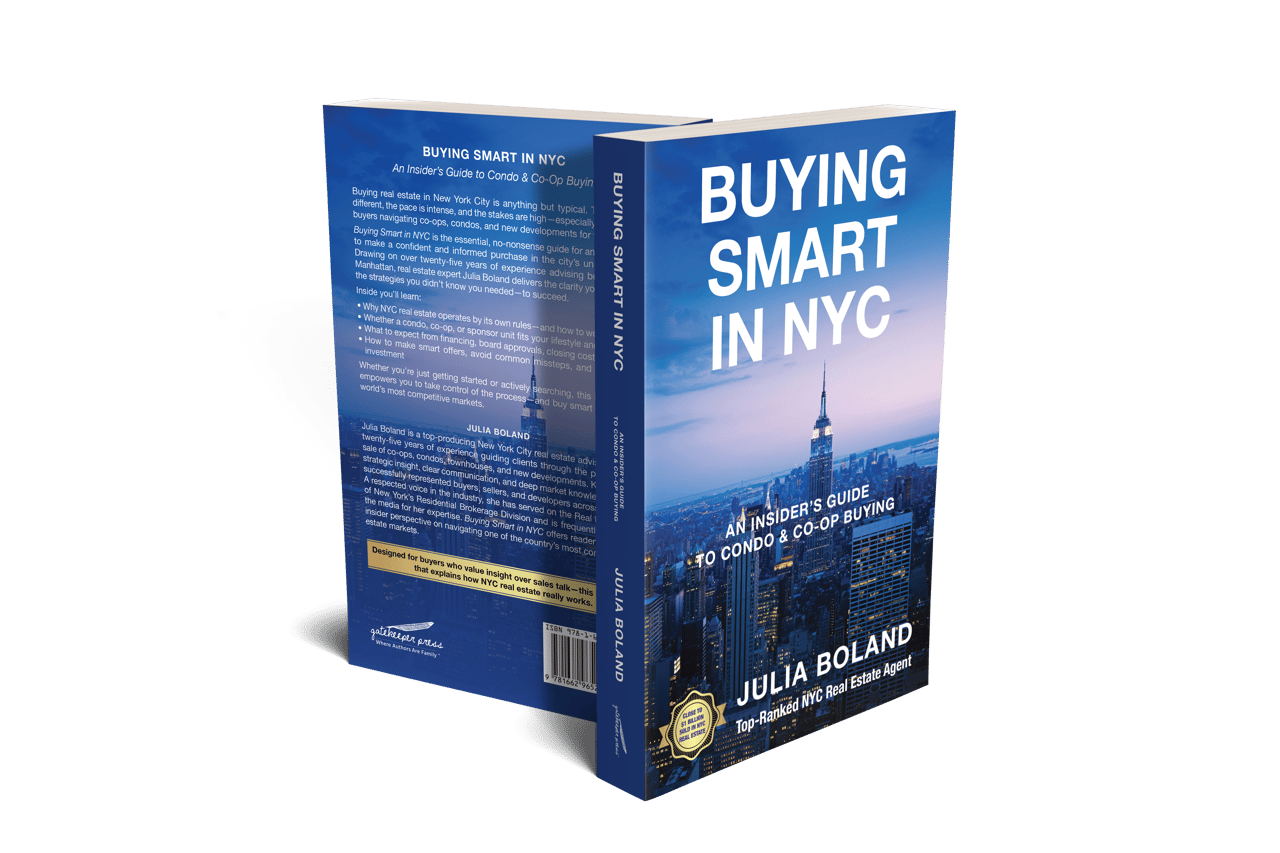
Over time, that growing mental catalog of conversations became something more structured. What started as a way to organize my own thinking evolved into a weekly blog, and that body of work ultimately became my book, Buying Smart in NYC: An Insider’s Guide to Condo and Co-op Buying, which I am proud to share is now published and available. Writing it was my way of answering a question I have been asked in countless forms over the past twenty-five years: what do I actually need to understand to get this right?
In most real estate markets, if you qualify financially, you can buy. In New York, that is only the beginning. This is one of the few housing markets in the country where a buyer can be fully approved for a mortgage and still be rejected by a co-op board. It is a market where the distinction between a condominium and a cooperative is not just a matter of ownership structure, but something that can fundamentally shape your experience, your financing options, and even your ability to close. It is also a market where two buildings on the same block, at the same price point, can operate under entirely different sets of rules. These nuances are not always obvious, and they are rarely explained in a way that allows buyers to confidently navigate them.
One of the most persistent misconceptions about New York real estate is that the challenge lies in access to information. In reality, the opposite is true. Buyers arrive having read extensively about listings, pricing trends, and neighborhood dynamics. The issue is not a lack of data, but the difficulty of interpreting that information within the context of how this market actually functions. Much of what is publicly available is fragmented, occasionally misleading, and rarely filtered through the lens of practical, on-the-ground experience. As a result, even highly informed buyers can find themselves making decisions based on incomplete or misapplied frameworks.
Throughout my career, I have found myself returning to the same essential explanations. Why a mortgage approval is not a guarantee of a successful co-op purchase. Why a building’s sublet policy can have long-term implications for both flexibility and value. Why the board package or purchase application is not a formality, but a critical component of the transaction itself and non-negotiable. Writing this book was an opportunity to bring those conversations together in one place and to make them accessible to a broader audience.
New York’s real estate market is often described as opaque or intimidating, but in my experience, it is neither once you understand its underlying structure. It is, in fact, highly logical. It rewards preparation and punishes assumption. Buyers who approach it with the right framework are able to move through the process with far greater confidence and control, while those who rely on general knowledge from other markets often find themselves at a disadvantage.
The core ideas in Buying Smart in NYC reflect the patterns I have observed over decades of advising clients. Manhattan real estate does not operate the way most people expect it to. Financial qualification is not the finish line, it is the starting point. A buyer is not simply purchasing a property, but also being evaluated by a building and its governing structure. And perhaps most importantly, the advantage in this market is not access to information, but the ability to interpret it accurately and apply it strategically.
The timing of this book is not accidental. Over the past several years, I have become increasingly aware that visibility in the real estate industry is often driven by platforms rather than expertise. Buyers are frequently funneled through systems that prioritize volume and referral economics, rather than thoughtful alignment or long-term outcomes. In response, I began writing more consistently, initially as a way to stay visible, but eventually as a way to contribute something more meaningful. That process not only helped me refine my own thinking, but also made clear just how many buyers were navigating this market without a reliable framework.
Writing the book required me to step back from the pace of daily transactions and examine what truly works. It pushed me to take what had long been intuitive, developed through years of experience, and translate it into something structured, repeatable, and teachable. Publishing independently allowed me to maintain complete ownership of that perspective, which was important to me because this book is not simply a collection of information. It is a reflection of how I think about this market and how I believe buyers should be guided through it.
My goal in writing Buying Smart in NYC is straightforward. I want readers to come away with a clear understanding of how this market operates and with the confidence to approach it strategically. Because in Manhattan, the difference between reacting to the process and navigating it with intention is often what determines the outcome.
The book is now available on Amazon. If you are considering a purchase in New York City, this is where I would suggest you begin—before you see a single apartment. And when you are ready to move forward, the next step is working with someone who understands how to apply that framework in real time.
Written by Julia Boland, a 25+ year NYC Real Estate Advisor specializing in Manhattan condos, co-ops, townhouses, and new development. She is the author of Buying Smart in NYC: An Insider’s Guide to Condo & Co-op Buying.
If you're planning to buy or sell a condo or co-op in Manhattan, the right guidance early in the process can make a meaningful difference. Every building operates differently—from board approval requirements to financing rules and negotiation strategy. If you have questions about the Manhattan market or are considering a move, feel free to reach out.
Frequently Asked Questions About Buying Real Estate in NYC
Why is buying property in New York City so different from other markets?
New York City operates under a fundamentally different structure than most U.S. housing markets. In many cities, financial qualification is the primary hurdle. In New York—particularly with co-ops—that is only the beginning. Buyers are evaluated not just by a lender, but by a building, its board, and its financial standards. Ownership structures, sublet policies, and board approval processes all play a critical role in determining whether a transaction can move forward.
What is the biggest mistake smart buyers make when entering the NYC market?
The most common mistake is assuming that a strategy that worked elsewhere will translate directly to New York. Highly capable buyers often rely on general market knowledge or online research, without realizing that NYC operates on a different set of rules. The issue is not a lack of intelligence or preparation—it’s applying the wrong framework to a uniquely structured market.
What is the difference between a condo and a co-op in NYC?
A condominium allows you to own real property and typically offers more flexibility, including easier approval processes and fewer restrictions on renting. A co-op, by contrast, is a corporation where you are purchasing shares that correspond to your apartment. Co-ops often have more rigorous financial requirements, board interviews, and restrictions that can affect everything from financing to future resale. Understanding this distinction is critical, as it can shape both your experience as a buyer and your long-term investment.
Can you really be denied after being approved for a mortgage?
Yes—and this is one of the defining characteristics of the New York market. In a co-op, the board has broad discretion over who is approved to purchase in the building. Even a financially strong, fully qualified buyer can be rejected if their finances aren’t presented properly. This is why preparing a strong board package and understanding a building’s expectations is just as important as securing financing.
Why isn’t online research enough to understand the NYC market?
There is no shortage of information available online, but much of it lacks context. Listings, pricing data, and market reports do not always reflect how decisions are made at the building level or how different variables interact in real time. Without a framework for interpreting that information, buyers can draw the wrong conclusions and make decisions that don’t align with how the market actually functions.
What role does a real estate agent play in NYC compared to other cities?
In New York, a knowledgeable agent is not simply facilitating access to listings—they are helping you navigate a complex system. This includes identifying buildings that align with your financial profile, advising on offer strategy, preparing board packages, and anticipating potential issues before they arise. The right guidance can materially impact both your experience and your outcome.
When should I start preparing if I’m thinking about buying in NYC?
Preparation should begin well before you start touring properties. Understanding your financial profile, aligning it with the types of buildings you can realistically pursue, and developing a strategy upfront will position you far more effectively once you enter the market. Buyers who begin with clarity tend to move more efficiently and with greater confidence.
Who is this book for?
Buying Smart in NYC is written for first time buyers and buyers who have succeeded in other markets and want to approach New York with the same level of discipline and intelligence. It is particularly relevant for professionals who are financially qualified but recognize that this market requires a different strategy and a deeper understanding of how decisions are made.
Do I need to read the book before starting my search?
You don’t need to—but you will be at a significant advantage if you do. The goal of the book is to provide a clear framework before you begin, so that every decision you make—from the types of properties you consider to the offers you submit—is grounded in how this market actually works.
What is the first step if I’m ready to buy in NYC?
Start by understanding the structure of the market and how it applies to your specific situation. That may begin with reading the book, but it should ultimately include working with someone who can help you translate that knowledge into a strategy. In New York, the difference between understanding the process and executing it well is what determines the outcome.