If you are thinking about buying on the Upper West Side, one question shapes almost everything else: should you buy a co-op or a condo? It is a big decision, especially in a neighborhood where classic prewar buildings, limited new inventory, and block-by-block price shifts can change your options fast. This guide will help you understand how the Upper West Side market works, what your budget may buy, and where the biggest condo versus co-op tradeoffs tend to show up. Let’s dive in.
Upper West Side Market Snapshot
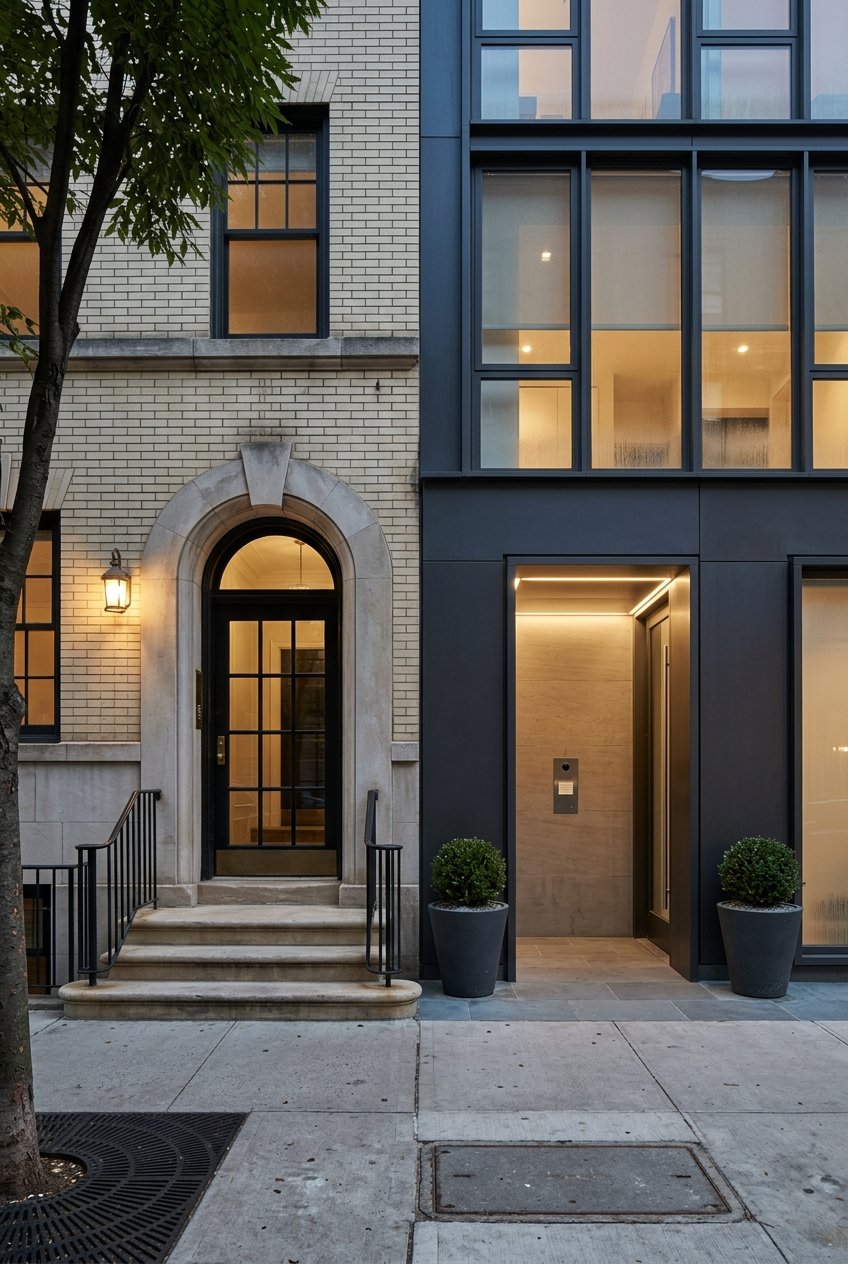
The Upper West Side generally runs from about 59th Street to around 110th Street, between Central Park and the Hudson River. It is known for historic architecture, strong cultural identity, and a housing stock dominated by large prewar apartment buildings, with newer development more limited in supply.
It is also one of Manhattan’s higher-cost submarkets. PropertyShark’s April 2026 data shows a median sale price of $1.85M in the Upper West Side, compared with $1.3M for Manhattan overall. The same report puts the neighborhood’s median price per square foot at $1,677.
When you break that down by property type, the pricing gap becomes even clearer. In that same snapshot, condos had a median sale price of $2.4M, while co-ops had a median sale price of $1.4M. Co-ops also accounted for more transactions, which reflects how important they remain to the Upper West Side resale market.
Why Condo Supply Feels Tight
If condo options seem limited, that is not your imagination. Bloomberg reported that only 51 new condo units are expected in the Upper West Side through 2028. That helps explain why newer, amenity-rich condos can feel scarce and why they often trade at a premium.
This is one reason the neighborhood works like a series of micro-markets rather than one single market. A full-service newer condo, a classic prewar co-op, and a park-facing apartment may all sit within the same neighborhood, but they can attract very different buyers and pricing.
Upper West Side Price Bands
Your budget will shape not just size, but also building type, location, and the level of flexibility you can expect. These ranges are directional based on current listings and neighborhood medians, not fixed rules.
Under $1M
In this range, you will usually be looking at studios and smaller one-bedrooms. Many of these are in older co-op buildings or in less prime Upper West Side locations.
Current examples cited in the research include a $649,900 studio at 100 West 93rd Street and an $865,000 one-bedroom at 215 West 95th Street. If your goal is to enter the neighborhood at a lower price point, this range often points you toward co-op inventory first.
$1M to $2M
This is often the main entry point for buyers who want a well-located one-bedroom or a compact two-bedroom. It can be a practical range for buyers balancing location with a bit more space.
Examples in the research include a one-bedroom at 720 West End Avenue for $1.325M, a one-bedroom at 161 West 61st Street for $1.412M, and a two-bedroom at 155 West 68th Street for $1.995M. In this band, you may need to choose carefully between square footage, condition, and building type.
$2M to $4M
At this level, many buyers start to see larger layouts, better views, or access to newer full-service condo buildings. This is often where the condo versus co-op decision becomes more strategic, because both product types may be available but with very different ownership experiences.
The research includes a two-bedroom at 115 Central Park West for $2.5M and a three-bedroom at 250 West 96th Street for $3.57M. What you gain in view, service level, or newer finishes may still come with tradeoffs in size or monthly costs.
$4M and Up
In the upper tier, park views, high floors, and larger layouts become more common. This is where buyers often compete for the most desirable combinations of light, outlook, scale, and address.
Examples include a four-bedroom at 212 West 72nd Street for $6.675M and a penthouse at 245 West 99th Street for $9.95M. Even at this level, the Upper West Side still rewards buyers who understand the difference between a premium block and a premium building.
Condo vs Co-op Basics
In New York, a condo and a co-op are not just different labels. They are different forms of ownership, and that changes the buying process.
With a condo, you are buying deeded real property. With a co-op, you are buying shares in the corporation that owns the building, along with a proprietary lease for your apartment.
That legal difference affects financing, timing, approval, and flexibility. On the Upper West Side, where co-ops make up a large share of the resale market, understanding those mechanics is essential before you make an offer.
How Condos Usually Compare
Condos are generally more expensive, but they tend to offer a more flexible buying process. According to Corcoran’s buyer guide, condos typically allow more flexible financing, usually do not require a board interview, and often start with a minimum 10% down payment.
They also tend to move faster once you are in contract. Corcoran estimates a typical condo closing timeline of about 1 to 3 months after contract signing. For buyers who want a more predictable process, that speed can matter.
Condos can make particular sense if you need more ownership flexibility or if your purchase structure is less standard. In a neighborhood where newer condo supply is already limited, that flexibility is part of why condos often command a premium.
How Co-ops Usually Compare
Co-ops often offer better value, especially if your priority is classic prewar scale rather than ownership flexibility. On the Upper West Side, that can mean a chance at more space or a stronger location for less than a comparable condo.
But the process is more involved. Corcoran’s guide notes that co-ops usually require board approval, often start at 20% down, and tend to close more slowly, typically around 3 to 4 months after contract signing.
The board package and interview happen after contract signing, and timing can depend on the board’s meeting schedule. That means even a well-qualified buyer needs patience and strong preparation.
Why Co-op Financial Review Matters
For a co-op purchase, lender approval is only one part of the picture. The co-op board will also review your financial profile, including what liquid assets you will have after closing.
StreetEasy’s explanation of post-closing liquidity notes that while there is no universal rule, two years of housing payments remaining in liquid assets is considered relatively standard for many New York City co-ops. That does not mean every building uses the same benchmark, but it helps explain why buyers sometimes qualify for a mortgage yet still need to strengthen their co-op profile.
This is one reason Upper West Side buyers benefit from thinking beyond purchase price alone. In a co-op search, your financial presentation can shape which buildings are realistic targets.
Due Diligence Matters in Any Building
No matter which property type you choose, building review is a major part of buying wisely. The New York State Attorney General advises buyers of co-ops and condos to read the full offering plan and consult an attorney before signing, especially for new construction or conversions.
For existing buildings, the Attorney General specifically flags facade, roof, elevator, plumbing, heating, and electrical issues as areas where expensive building-wide repairs can arise. The office also recommends reviewing board minutes and financial reports for signs of pending work or structural problems.
For new-development condos, there is another important point. The Attorney General warns that the offering plan, not brochures or verbal statements, controls what the sponsor is required to deliver.
The Main Upper West Side Tradeoffs
On the Upper West Side, buyers are often making more than a condo versus co-op decision. They are usually balancing three factors at once: location, views, and interior space.
Research points to Central Park-facing blocks and Riverside Drive as some of the neighborhood’s most expensive corridors. In practical terms, that often means a premium for direct park proximity, open views, or waterfront exposure.
If your budget is fixed, you may need to give up one of those priorities to keep another. You might choose a less prominent block for more square footage, or a smaller apartment in exchange for a stronger outlook or more iconic address.
Think in Micro-Markets, Not One Market
One of the smartest ways to approach the Upper West Side is to stop thinking of it as one uniform neighborhood. A park-side home, a Riverside Drive address, and a western or more northern block can each offer a very different value proposition.
That matters because your best fit may not be the most obvious listing at your price point. A classic prewar co-op with generous rooms may outperform a smaller condo for your lifestyle, while a newer condo may be worth the premium if ease of purchase and future flexibility matter more to you.
This kind of block-by-block and building-by-building strategy is especially important in Manhattan. On the Upper West Side, broad market averages are useful, but your actual decision usually comes down to a much narrower set of tradeoffs.
How to Choose the Right Path
If you are deciding between a condo and a co-op on the Upper West Side, start with your real priorities rather than the apartment photos. Ask yourself:
- Do you want the widest possible range of buildings, even if the approval process is more involved?
- Is maximizing value and square footage more important than ownership flexibility?
- Do you need a faster closing timeline?
- Are you comfortable preparing for board review and post-closing liquidity expectations?
- Is your top priority a specific block, a park or river view, or a larger layout?
The answers will usually narrow your search faster than price alone. In this neighborhood, the right purchase is often the one that matches both your budget and your process tolerance.
If you want a calm, strategic read on where you fit in the Upper West Side market, Julia Boland offers no-pressure guidance grounded in Manhattan micro-markets, co-op and condo realities, and the kind of preparation that helps buyers move with confidence.
FAQs
What is the price difference between Upper West Side condos and co-ops?
- PropertyShark’s April 2026 data shows a median sale price of $2.4M for condos and $1.4M for co-ops on the Upper West Side.
What down payment is typical for an Upper West Side condo purchase?
- Corcoran’s buyer guide says condos typically start with a minimum 10% down payment.
What down payment is typical for an Upper West Side co-op purchase?
- Corcoran’s buyer guide says co-ops usually start at 20% down, though individual buildings may have their own requirements.
How long does an Upper West Side condo closing usually take?
- Corcoran estimates that condo closings typically take about 1 to 3 months after contract signing.
How long does an Upper West Side co-op closing usually take?
- Corcoran estimates that co-op closings typically take about 3 to 4 months after contract signing, partly because of the board approval process.
What should buyers review before buying an Upper West Side co-op or condo?
- The New York State Attorney General advises buyers to review the full offering plan, plus building financial reports and board minutes, and to pay close attention to possible facade, roof, elevator, plumbing, heating, and electrical issues.
Julia Boland is a Manhattan residential real estate specialist at Corcoran with over 25 years advising buyers and sellers on NYC co-ops, condos, and townhouses. She is the author of Buying Smart in NYC: An Insider's Guide to Condo & Co-op Buying (2026). Whether you're just starting your search or ready to make a move, Julia and The Boland Team are here to help. Reach out at thebolandteamnyc.com or call (848) 200-1452.